Vintage Autumn Floral Junk Journal Pages for Your Projects
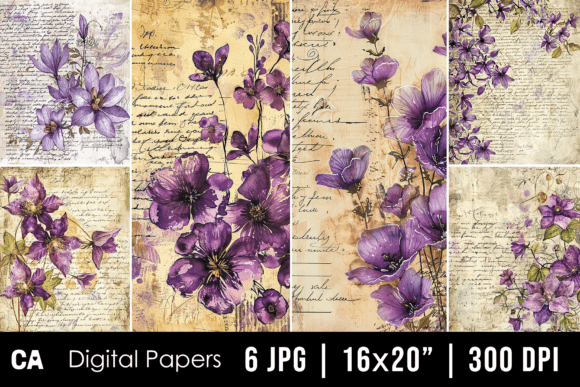
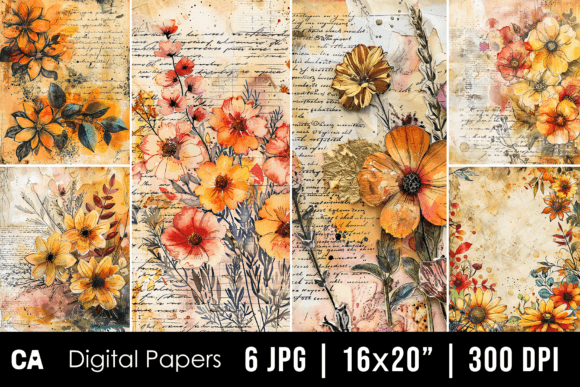
There’s a particular feeling that comes with the first crisp day of autumn. It’s a blend of nostalgia, warmth, and a quiet appreciation for the beauty of decay. Capturing that feeling in a digital format is no small feat, but the Vintage Autumn Floral Junk Journal Pages do it with effortless grace. These aren’t just digital backgrounds; they are digital artifacts. Each of the six printable pages is a rich tapestry of muted, earthy tones—think burnt sienna, deep ochre, sage green, and dusty rose—woven together with the delicate lines of aged botanicals. You’ll find faded roses, intricate ferns, and the subtle texture of antique paper, all layered to create a backdrop that feels both timeless and deeply personal.
The true personality of this collection lies in its gentle imperfection. Unlike sterile, overly polished digital assets, these pages embrace the charm of the past. You’ll notice soft stains, faint handwriting, and the gentle wear of time, which gives them an authentic, hand-crafted quality. This style resonates because it tells a story. It’s the visual equivalent of a well-loved book or a letter tucked away in a drawer. For designers and creators, this translates into an immediate sense of depth and character. When you use a Vintage Autumn Floral Junk Journal Page as a foundation, you’re not starting from scratch; you’re building upon a narrative that already exists, inviting your audience into a world of warmth and contemplation.
Where These Backgrounds Truly Shine
The applications for such a versatile creative font—or in this case, a design asset—are surprisingly broad. For the crafter and hobbyist, these are a dream for junk journaling and scrapbooking. Imagine using one as a full-page background for a cherished autumn memory, or cutting out individual floral elements to layer over photos and mementos. The high-resolution 300 DPI ensures that even when printed at a generous 16x20 inches, every detail remains crisp, making them perfect for physical projects like handmade cards, gift tags, or even custom wrapping paper.
For the digital creator and entrepreneur, the value is equally potent. These backgrounds are ideal for creating social media graphics that stop the scroll. A quote overlayed on one of these textured pages feels instantly more profound and shareable. Bloggers and content creators can use them for Pinterest pins, Instagram stories, or featured images that set a specific, cozy tone for their fall content. In the realm of brand identity, particularly for businesses in the lifestyle, wellness, artisan, or publishing sectors, these backgrounds can inform a cohesive visual language. Use them as website hero images, email newsletter headers, or the backdrop for product photography to evoke a sense of authenticity and seasonal warmth.
Integrating Texture into Your Design Workflow
Working with a textured background like a Vintage Autumn Floral Junk Journal Page requires a slightly different approach than using a solid color or a simple gradient. The key is balance. The background is the star, so any foreground elements—be it text, logos, or other graphics—need to complement, not compete. This is where thoughtful font pairing becomes crucial. A clean, modern sans serif font can create a beautiful contrast, allowing your message to pop against the vintage chaos. Conversely, a delicate script font or a classic serif font can enhance the romantic, nostalgic feel.
Consider the hierarchy of your design. Use the background’s natural focal points—perhaps a cluster of flowers or an empty, less textured area—to place your most important text. Adding a subtle overlay, like a semi-transparent white box or a soft vignette, can improve readability without completely obscuring the beautiful background. For logo design or packaging design, think of these pages as a mood. They might not be the logo itself, but they could be the texture behind the logo on a business card, or the pattern that fills the interior of a box, creating a memorable unboxing experience. The goal is to use these design assets strategically to evoke a specific emotion and build a connection with your audience, transforming a simple project into something with soul and story.