Unlock Creative Magic with Dreamy Watercolor Rainbow Backgrounds
The Soft, Ethereal Appeal of Watercolor Textures
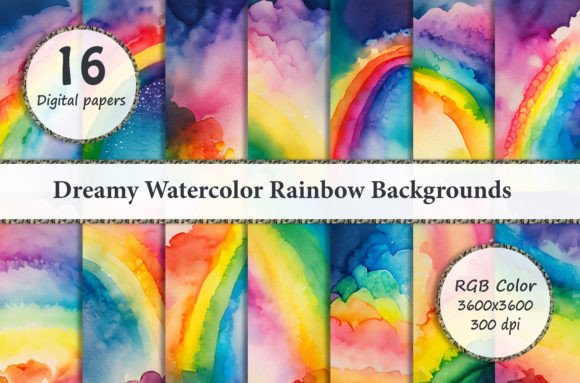
There's a reason designers reach for watercolor textures when they want to add warmth and personality to a project. Unlike flat digital colors or harsh geometric patterns, watercolor carries an organic, hand-painted quality that immediately softens a composition. The Dreamy Watercolor Rainbow Backgrounds collection taps into this appeal with sixteen carefully crafted digital papers that blend the whimsy of rainbow hues with the gentle, flowing nature of watercolor washes.
What makes these backgrounds stand out is their versatility. Each file measures 3600 x 3600 pixels at 300 dpi, which means you're working with high-resolution assets suitable for both digital screens and professional print output. The rainbow palette isn't garish or overwhelming—it leans into pastel tones and blended edges that feel contemporary without sacrificing that handmade charm. Think of how a sunset bleeds into the horizon, or how light refracts through a prism. These backgrounds capture that same sense of gentle, natural color transition.
From a design perspective, watercolor textures like these serve a specific purpose in your toolkit. They provide visual interest without competing with typography, photography, or illustration layered on top. That balance is harder to achieve than most people realize, and it's exactly why a well-curated set of Dreamy Watercolor Rainbow Backgrounds becomes a go-to resource rather than a one-time-use asset.
Where These Backgrounds Truly Shine
Think about the projects you've worked on recently. How often did you need a background that felt inviting but not distracting? These backgrounds work beautifully across a surprisingly wide range of applications. For invitation design—whether it's a baby shower, wedding, or birthday party—the soft rainbow tones create a celebratory mood without overwhelming the event details. Pair them with a clean sans serif font for modern elegance, or layer a flowing script font over them for something more romantic.
Small business owners and entrepreneurs will find immediate value here, too. If you're designing packaging for handmade products, creating social media graphics for a lifestyle brand, or building out brand identity materials for a creative studio, these backgrounds offer a polished foundation. Bottle caps, t-shirt designs, cell phone covers, jewelry tags, magnets—any product that benefits from a colorful, artisan aesthetic can leverage these textures effectively.
Digital creators and content producers aren't left out either. Desktop backgrounds, website hero sections, blog post headers, and digital album covers all benefit from the layered depth that watercolor provides. Scrapbooking enthusiasts and paper crafters will appreciate the high resolution, which ensures crisp printing at any standard size. Even nail wrap designers and label creators can scale these backgrounds confidently, knowing the 300 dpi quality holds up under close inspection.
Working with Layers: A Practical Approach
Here's where a little technical knowledge goes a long way. These backgrounds arrive as JPEG files inside a single zip folder, which means you'll want to work in software that supports layer-based editing. Adobe Photoshop and Photoshop Elements are natural fits. Paint Shop Pro handles layers comfortably as well. If you're a Lightroom user, you'll need a plugin that enables layer functionality—otherwise, you'll hit a wall quickly.
The workflow is straightforward once you have the right tools. Open one of the JPEG backgrounds as your base layer, then build your design on top. Add your text, illustrations, or photographs as separate layers so you can adjust opacity, blend modes, and positioning independently. This non-destructive approach lets you experiment freely. Try setting your text layer to "Multiply" for a subtle texture bleed-through, or use "Soft Light" on an overlay graphic for a dreamy, integrated look.
One practical tip: don't treat these backgrounds as static. Because watercolor textures have natural variation in tone and saturation, you can crop into different sections of the same file and get distinctly different results. The upper-left corner might offer a softer, more muted palette while the center-right area delivers bolder color concentration. Sixteen files suddenly become dozens of unique compositions when you crop and reframe with intention.
Choosing the Right Background for Your Project
Not every background suits every purpose, so spend a few minutes evaluating fit before committing. Consider the mood you're setting. A project aimed at children's products or playful branding might call for the more saturated, vibrant options in the set. Something targeting adults—wedding stationery, boutique packaging, editorial design—might benefit from the subtler, more pastel-forward files.
Font pairing matters enormously when working with textured backgrounds. Because watercolor introduces organic visual noise, you want typefaces that remain legible at the sizes you're using. Bold display fonts with strong letterforms tend to hold their own against colorful backdrops. Thin, delicate typefaces can get lost. If you're using a handwritten font or modern typography style, test it at actual size on a few different backgrounds before finalizing. What looks beautiful in isolation might become hard to read once layered over color washes.
For logo design and brand identity work, think about consistency. Pick two or three backgrounds from the set that share similar color temperatures and use those across your materials. This creates visual cohesion even when individual elements vary. A greeting card line, for instance, could rotate through different rainbow backgrounds while maintaining a unified look through consistent typography and layout structure.
Commercial Use and Final Thoughts
One of the most practical advantages of a curated set like this is the licensing clarity it provides for commercial projects. When you're designing products for sale—whether physical goods like printed merchandise or digital downloads—you need assets you can use confidently. Having a defined set of design assets at professional resolution eliminates guesswork and reduces the time spent sourcing and testing alternatives.
These Dreamy Watercolor Rainbow Backgrounds aren't trying to be everything. They do one thing well: provide a soft, colorful, professionally rendered foundation that enhances your work without overshadowing it. That specificity is their strength. Keep them in your resource library, pull them out when the project calls for warmth and color, and let your own creativity handle the rest.