Layered Textures and Bold Typography in Urban Design
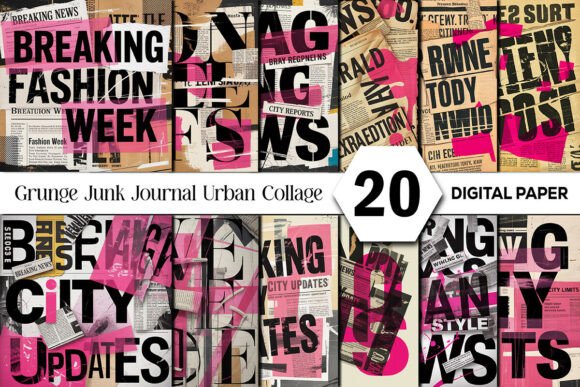
In the digital age of perfectly polished vectors and minimalist aesthetics, there is a refreshing power in embracing the raw, tactile nature of the physical world. Grunge Junk Journal Urban Collage is a visual resource that captures this energy, offering a collection of backgrounds that feel like they were ripped from a city wall or a creative’s private notebook. It is not just a set of images; it is a mood board made tangible. This collection brings together the chaotic beauty of layered newspaper textures and the raw edge of distressed typography, creating a foundation for designs that demand attention and exude authenticity.
The Anatomy of a Raw Aesthetic
Understanding the visual language of Grunge Junk Journal Urban Collage requires looking at the details. At its core, this style is about layering. It mimics the process of collecting ephemera—newspaper clippings, ticket stubs, handwritten notes—and arranging them into a cohesive, yet intentionally imperfect, whole. The distressed typography adds a human element, suggesting that these words were typed on an old machine or hand-lettered with a marker. This imperfection is key; it signals honesty and a rejection of sterile digital perfection. The inclusion of vibrant pink accents against a more muted, gritty background creates a striking contrast. This juxtaposition of soft and hard, modern and vintage, gives the design its unique personality. It speaks to a contemporary audience that values individuality and street-level authenticity over corporate polish.
Visual Characteristics That Define the Style
The strength of this style lies in its inherent texture. You can almost feel the grain of the paper and the grit of the ink. The typography is not clean or crisp; it is weathered, as if it has lived a life. This creates a sense of history and depth. The color palette, anchored by that bold pink, is both unexpected and highly effective. It prevents the grunge elements from feeling dated or purely nostalgic, instead pushing them into a modern, editorial context. This is a creative font style, not in the literal sense of a typeface file, but in its application as a comprehensive design asset. It functions as a complete visual identity, providing everything needed to set a specific tone for a project.
Practical Applications for Modern Creators
Where does a resource like Grunge Junk Journal Urban Collage truly shine? Its applications are broad, but they all share a common thread: a desire for a strong, memorable, and human-centric brand identity. This is not the background for a law firm’s annual report. It is the perfect foundation for projects that aim to connect on a visceral level.
- Editorial and Publishing: For magazine covers, blog headers, or book layouts that deal with urban culture, street art, music, or contemporary fiction. The layered textures provide instant visual interest and set a sophisticated yet edgy tone.
- Branding and Marketing: Ideal for streetwear brands, independent record labels, artisan coffee shops, or any business targeting a young, creative demographic. Using these backgrounds in social media graphics or website banners immediately communicates a brand’s cool, authentic personality.
- Digital Content Creation: YouTubers, podcasters, and influencers can use these backgrounds for thumbnails, channel art, or quote cards. The high-resolution design assets ensure everything looks sharp on screen, while the style adds a layer of professionalism and curated taste.
- Personal and Craft Projects: For hobbyists creating junk journals, scrapbooks, or digital planners. The 12x12 inch size and high resolution 300 DPI format make them perfect for printing. They provide a ready-made, cohesive foundation that saves hours of digital or physical collaging work.
Influencing Perception and Engagement
The choice of visual style is a direct communication with your audience. Selecting a Grunge Junk Journal Urban Collage background tells your viewers something specific. It says you are not afraid of texture, that you appreciate the beauty in imperfection, and that your project has an underlying narrative. This can significantly enhance audience engagement. People are drawn to authenticity. A perfectly smooth, generic gradient often fails to create an emotional connection, whereas a textured, layered collage invites the eye to explore and discover details.
In terms of visual hierarchy, these backgrounds are powerful but require careful handling. They are inherently busy, so any foreground text or graphics must be chosen for maximum legibility. A bold, clean sans serif font or a strong serif font with good weight often pairs best, creating a clear contrast against the detailed backdrop. The goal is to let the background set the mood while your core message remains crisp and readable. This balance is crucial for maintaining professionalism while embracing a raw aesthetic.
Making It Work: A Guide for Implementation
Integrating such a distinct style into a project requires a thoughtful approach. It is not a universal solution, but when used appropriately, it is incredibly effective. Here is how to approach it practically.
- Evaluate Project Fit: First, ask if this style aligns with your project’s core message and audience. Is your subject matter urban, artistic, rebellious, or deeply personal? If yes, proceed. If your project is corporate, formal, or requires extreme minimalism, this might not be the right tool.
- Test Font Pairings: The backgrounds are the star, so your typography should support, not compete. Experiment with pairing. A classic sans serif font like Helvetica or Futura can provide modern clarity. A robust serif font can add a touch of editorial gravitas. Avoid overly decorative script fonts or handwritten fonts that might get lost in the texture.
- Review the Included Assets: The collection offers 20 unique backgrounds. Do not just pick the first one. Browse all options. Some may have more text, others more geometric shapes or color blocks. Select the one that best frames your specific content. The variety allows for consistency across a campaign without repetition.
- Consider Readability: Always test your text over the background at actual size. Ensure there is sufficient contrast. Sometimes, placing a semi-transparent colored box or a subtle shadow behind text can improve readability without sacrificing the aesthetic.
- Understand the License: This is a commercial font and asset package. The license for commercial use is a major advantage, allowing you to use it in client work, products for sale, and marketing materials without legal concern. This makes it a valuable investment for freelancers and small businesses.
In the end, Grunge Junk Journal Urban Collage is more than a set of printable backgrounds. It is a gateway to a specific design philosophy—one that values texture, history, and bold expression. By understanding its components and applying it with intention, you can create work that feels alive, resonant, and distinctly modern.